
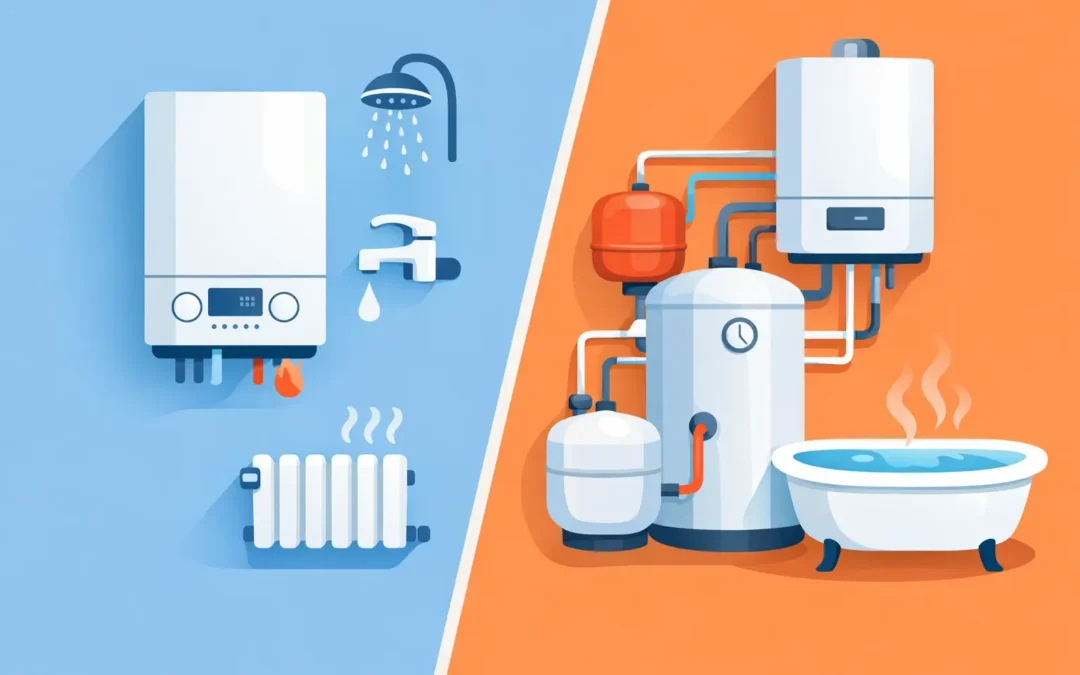
A boiler that keeps the house warm but leaves the shower running lukewarm when someone opens a tap is not the right fit for a busy home. When weighing up combi versus system boilers, the key question is not simply which is newer or more efficient. It is which arrangement will give your household dependable heating and hot water on an ordinary winter morning, as well as when family or guests are visiting.
Both boiler types can be highly efficient when correctly specified, installed and maintained. The better choice depends on your hot-water demand, available space, incoming water pressure and plans for the property.
Combi versus system boilers: the main difference
A combi boiler, short for combination boiler, provides central heating and hot water from one compact unit. It heats water directly from the mains when you turn on a hot tap or shower. There is no separate hot-water cylinder, so you do not need to store a tankful of hot water in an airing cupboard.
A system boiler heats your radiators and sends hot water to a separate cylinder. The cylinder stores a supply of hot water ready for use. Most of the main heating components are built into the boiler itself, which can make the installation neater than an older conventional boiler arrangement, while still retaining the benefit of stored hot water.
Neither type is automatically best. A compact flat with one bathroom has very different needs from a family house with two showers, or a coastal holiday property used by several people at once.
When a combi boiler is a good choice
Combi boilers are popular for smaller homes and households with modest, predictable hot-water use. As there is no cylinder to find space for, they are particularly useful where a kitchen cupboard installation makes sense or an airing cupboard is needed for storage.
The main practical benefit is hot water on demand. You are not waiting for a cylinder to reheat after it has been used, and you are not paying to keep a large store of water hot all day. For a one-bathroom home where people tend not to use several hot outlets at once, this can be an efficient and straightforward arrangement.
A combi can also suit a property undergoing refurbishment, especially where removing an old cylinder frees up valuable room. Modern models offer good heating control and can work well with thermostats and smart controls when the rest of the system is designed properly.
There is a trade-off. A combi has to divide its hot-water output between the outlets being used. If one person is showering while another runs a bath or uses the kitchen tap, the flow can reduce and the temperature may fluctuate. The boiler cannot create more mains-water flow than the property receives.
For that reason, a combi is not always the right answer for larger homes just because it saves space. A powerful boiler on paper cannot overcome poor incoming mains pressure or a household that regularly needs several strong showers at the same time.
What to check before choosing a combi
Your engineer should assess the mains-water flow and pressure rather than relying on assumptions. They should also ask how many bathrooms and showers you have, how often they are used together, and whether you are planning an extension or loft conversion.
It is worth being realistic about peak demand. A couple who shower at different times may be very happy with a combi. A family trying to get ready for school and work between 7am and 8am may find a stored hot-water system far more comfortable.
Why a system boiler suits many larger homes
A system boiler and hot-water cylinder are often the better option where more than one bathroom is in regular use. Because hot water is stored and ready, a well-sized cylinder can supply more than one outlet at once with stronger, steadier performance than many combi arrangements.
This makes system boilers a sensible choice for family homes, properties with ensuite bathrooms, and homes where filling a bath as well as running a shower is part of normal life. The cylinder capacity can be selected around the household’s likely demand, rather than expecting one boiler to provide every litre instantly.
System boilers can also be a practical upgrade where a property already has a cylinder and the household is happy with its hot-water performance. Retaining or replacing the cylinder may involve less disruption than changing the whole layout to a combi, although every installation needs to be assessed individually.
The compromise is space. You need room for a hot-water cylinder, usually in an airing cupboard or utility area. A cylinder also needs sensible control settings and regular consideration as part of the wider heating system. If it is too small, hot water can run out after heavy use and require time to recover.
Cylinder size matters as much as boiler choice
A system boiler will only perform as well as the cylinder and pipework it serves. An undersized cylinder can leave a large household short of hot water, while an oversized one may take up unnecessary space and cost more to heat.
The right size depends on the number of bathrooms, the type of showers fitted, household size and the way the home is used. A high-flow shower, for example, can use stored water quickly. This is why a proper survey is more useful than choosing a boiler solely from an online comparison chart.
Efficiency is about the whole installation
It is easy to assume that a combi is always cheaper to run because it does not store hot water, but the real picture is more detailed. A system boiler with an insulated cylinder, suitable controls and a correctly balanced heating system can be an efficient and comfortable solution.
Likewise, a combi boiler may be economical for the right household, but frequent demand from several outlets can expose its limitations. Boiler efficiency ratings matter, yet so do radiator sizing, insulation, heating controls, pipework condition and how the system is used.
When replacing an older boiler, the installation should include the correct system protection and cleaning where required. Sludge and debris in old pipework can affect circulation and shorten the life of a new boiler. A quality installation is about more than fitting the appliance on the wall and switching it on.
Think ahead before changing boiler type
Your current property use is important, but future plans should carry weight too. If you expect to add an ensuite, convert the loft, welcome a growing family or regularly have visitors, a boiler arrangement that only just meets today’s demand may soon become frustrating.
Conversely, installing a cylinder-based system in a small home with one shower and very limited storage may add cost and complexity without delivering a meaningful benefit. The aim is not to fit the largest system. It is to fit one that is properly matched to the home.
For landlords, reliability, tenant comfort and safe annual servicing should all be part of the decision. A boiler that tenants can use easily, supported by clear controls and appropriate hot-water capacity, helps avoid avoidable call-outs. Gas appliances must be installed, serviced and checked by suitably qualified engineers, with the right certification and records in place.
Static caravan owners should seek advice specific to their appliance and LPG installation. Caravan heating and hot-water systems have different space, ventilation and safety considerations from a house, particularly on the Lincolnshire coast where properties may be left unused through winter. Winter drain-down and frost protection remain essential where applicable, whichever hot-water arrangement is fitted.
Questions an engineer should ask
A reliable recommendation starts with listening. Before advising on combi or system boilers, an engineer should want to know about your bathrooms, shower types, household routine, current faults, available cupboard space and future plans. They should check the condition of the existing system and, where relevant, test the incoming mains supply.
You should also receive a clear explanation of what is included: the boiler model, cylinder if needed, controls, flushing or cleaning work, pipe alterations, warranties and any additional repairs identified. The cheapest quotation is not always the best value if essential work has been left out.
A.C.S Gas Ltd can assess your existing heating arrangement and explain the options in plain language, helping you choose a boiler system that suits the property rather than pushing a one-size-fits-all answer.
The right boiler should fade into the background: warm radiators when the weather turns, enough hot water when the household is busy, and the confidence that the system has been installed and maintained safely. A careful survey now can prevent years of compromised showers, wasted space or unnecessary disruption later.