
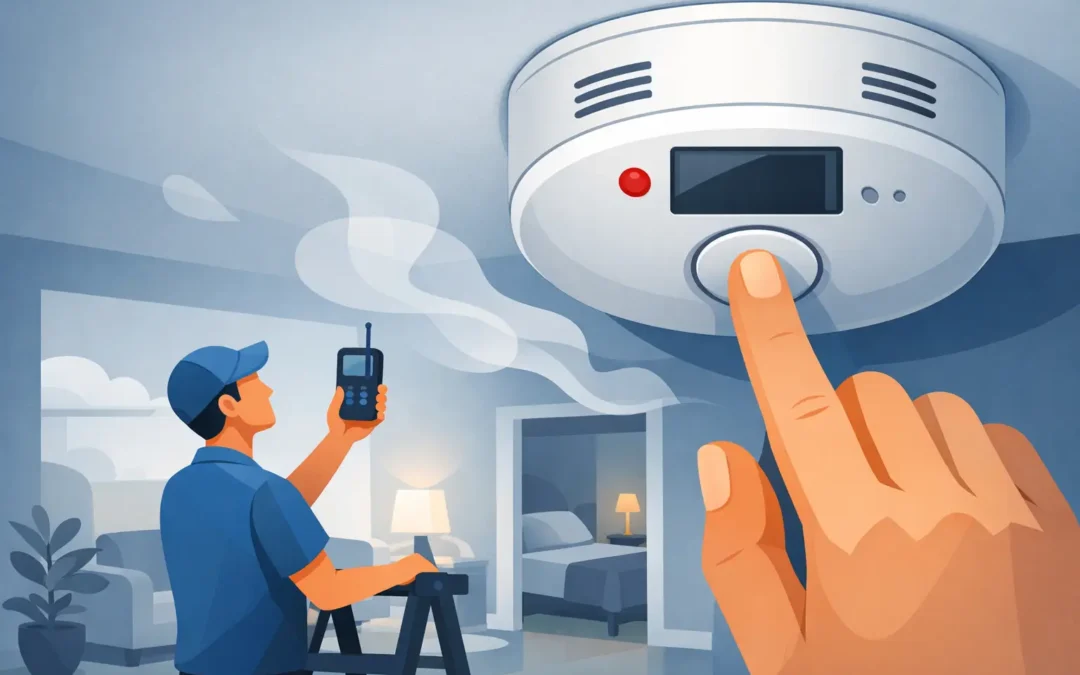
A carbon monoxide alarm may be small, but it has one job that matters enormously: warning you when an invisible, odourless gas could be putting people at risk. To test home carbon monoxide alarms properly, you need more than a quick press of the button once in a while. You also need to understand what that button does – and what it cannot tell you.
For homes, rented properties and static caravans around Skegness and the Lincolnshire East Coast, alarms are an essential extra layer of protection alongside correctly installed, serviced and maintained gas, LPG or oil appliances.
What the test button actually checks
Most carbon monoxide alarms have a test button on the front. Pressing and holding it should trigger a loud alarm after a few seconds. This confirms that the battery, sounder and basic electronics are working. It is a simple but worthwhile check.
It does not prove that the sensor will detect carbon monoxide at the correct level. It also does not prove that your boiler, fire, cooker or caravan heating appliance is safe. An alarm test is not a replacement for professional servicing, a gas safety inspection or dealing with a suspected fault.
A good routine is to test the button monthly, or as often as the manufacturer instructs. Make it part of a household safety check – perhaps when you check smoke alarms or at the start of each month. Tell everyone in the property that you are testing it, particularly children, older relatives or neighbours who may be concerned by the noise.
A simple alarm test routine
Check that the alarm is securely fitted in its intended position and that it has not been covered by furniture, decorations or stored belongings. Press and hold the test button until the alarm sounds, then release it. The sound should be clear and strong.
If there is no sound, the alarm may have a flat battery, be switched off, have reached the end of its working life or have developed a fault. Follow the manufacturer’s instructions for the particular model. Do not assume a new battery will solve every issue, especially where the unit is sealed or displays an end-of-life warning.
Many alarms also have indicator lights or a display. A green light may indicate power, while amber or red lights can signal a fault, low battery or detected carbon monoxide. The meanings vary by model, so keep the instruction leaflet somewhere you can find it.
When to test home carbon monoxide alarms more often
Monthly testing is a sensible baseline, but there are times when an extra check makes sense. Test an alarm after fitting it, replacing a battery, returning to a property after a long absence or before a holiday home is occupied for the season.
Static caravan owners should pay particular attention at the beginning of the season and whenever the caravan has been closed up for a period. LPG appliances, flues and ventilation need appropriate checks, and a caravan can feel very different after winter weather, damp conditions or storm damage. An alarm is valuable, but it should sit alongside an annual gas safety check and proper appliance maintenance.
It is also wise to test alarms after building work, decorating or rearranging a room. Dust, paint vapour and accidental knocks can affect an alarm or leave it obstructed. If an appliance has been repaired, serviced or replaced, test the alarm afterwards as part of returning the room to normal use.
Do not test an alarm with a flame or exhaust fumes
Never attempt to create carbon monoxide by holding the alarm near a boiler flue, car exhaust, barbecue, cooker flame or portable heater. This can expose you and others to real danger, may damage the sensor and will not provide a reliable result.
Avoid using candles, smoke, aerosols or incense around the alarm as a makeshift test too. Carbon monoxide alarms are designed to respond to carbon monoxide, not smoke. Smoke alarms and carbon monoxide alarms perform different jobs, and each should be tested according to its own instructions.
Some manufacturers supply approved aerosol test kits for particular alarm models. If yours does, only use the product exactly as instructed. For most households, using the built-in test button and replacing the alarm at the recommended date is the right approach.
Know the signs that an alarm needs replacing
Carbon monoxide alarms do not last forever. Many have a working life of around seven to ten years, although the exact period depends on the model. Look for the expiry date printed on the unit or in the instructions. A working test button does not override an end-of-life message.
Replace the alarm if it is past its stated replacement date, repeatedly chirps despite the correct battery being fitted, has visible damage, has been exposed to water, or displays a fault warning. If you have moved into a property and do not know the age of the alarm, replacing it is often the safest and simplest option.
Choose an alarm made to the appropriate British and European standard for domestic carbon monoxide detection, commonly marked EN 50291-1. For a caravan or motorhome, look for a model suitable for that environment and its specific requirements. Battery-powered alarms can be practical where wiring is difficult, while sealed long-life battery models reduce the chance of batteries being removed or forgotten. Mains-powered units may suit some homes, but they still need routine testing and may have a back-up battery.
Positioning matters as much as testing
An alarm placed in the wrong location may not give the protection you expect. Follow the manufacturer’s siting instructions, as the right height and distance from an appliance can vary. In general, alarms should be installed in rooms containing a fixed fuel-burning appliance, as well as in suitable sleeping areas where required or recommended.
Keep them away from very humid areas, direct drafts, extractor fans, open windows and places where cooking fumes or steam may cause nuisance problems. Do not hide an alarm behind curtains or cupboards. It needs to be heard, seen and accessible for testing.
For landlords in England, carbon monoxide alarm requirements apply in rented homes and should be treated as part of a wider safety responsibility. A working alarm does not replace the legal requirement for annual gas safety checks where gas appliances are provided, nor does it remove the need to investigate tenant reports of fumes, appliance faults or an alarm activation promptly.
If the alarm sounds, act straight away
Treat a carbon monoxide alarm as a real warning unless you are certain it is sounding because you have just pressed the test button. Do not ignore it, silence it and go back to bed.
Open doors and windows if it is safe to do so, turn off fuel-burning appliances if you can do this without risk, and get everyone outside into fresh air. Call the relevant emergency gas service or seek urgent professional advice. If anyone feels unwell, call 999 or seek medical help straight away.
Common symptoms of carbon monoxide exposure can include headache, dizziness, nausea, tiredness, confusion, shortness of breath and chest pain. They can be mistaken for flu, food poisoning or general illness, particularly during winter. If symptoms improve when you leave the building and return when you go back inside, take that seriously.
Do not re-enter or use the appliance until it has been checked and declared safe by a suitably qualified engineer. Ventilating a room may reduce the immediate concentration, but it does not fix the source of the problem.
Alarms support servicing – they do not replace it
Carbon monoxide is often linked to faulty, poorly maintained or incorrectly ventilated fuel-burning appliances. A boiler, gas fire, LPG caravan heater, oil appliance or solid-fuel appliance may produce dangerous fumes if combustion is poor or a flue is blocked, damaged or disconnected.
Regular servicing gives an engineer the chance to inspect the appliance, check safe operation, identify deterioration and spot issues before they become an emergency. Keep ventilation grilles clear, never block air vents to stop draughts, and do not use outdoor-only appliances such as barbecues or patio heaters indoors or in enclosed caravan awnings.
A.C.S Gas Ltd can help homeowners, landlords and caravan owners across the Lincolnshire East Coast with appliance servicing, gas safety work and practical advice where an alarm has raised concern. If an alarm is chirping, expired or sounding, deal with it promptly – a few minutes spent checking today can protect everyone sleeping under your roof tonight.