
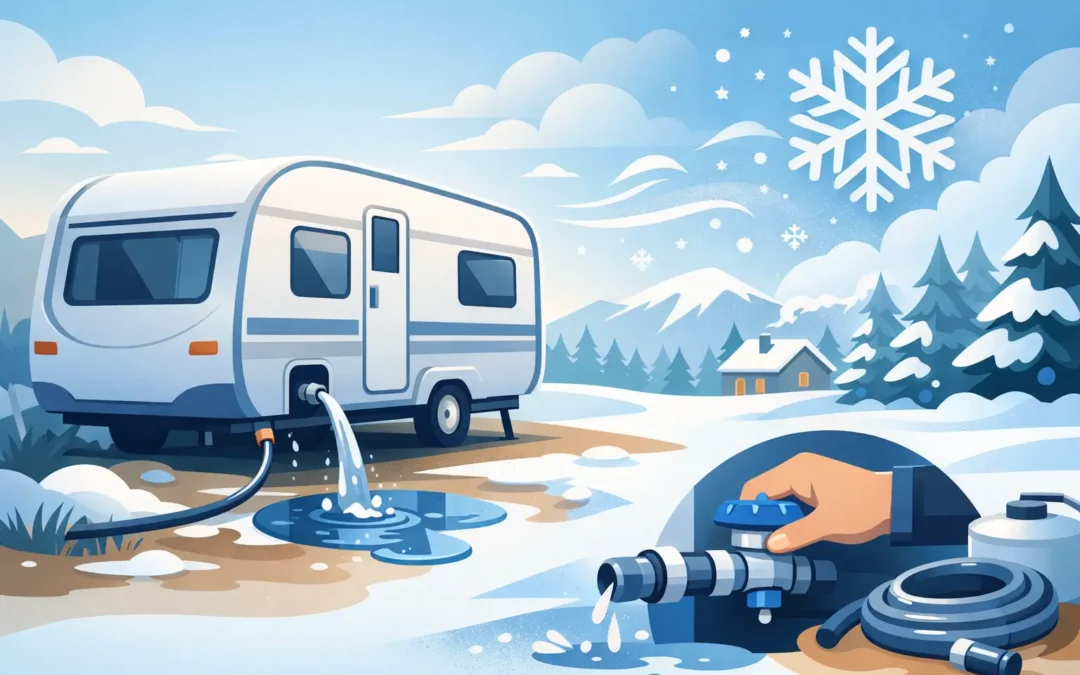
A hard frost can cause expensive damage in a surprisingly short time. When a static caravan is left unused with water still sitting in its pipes, taps or water heater, that water can freeze, expand and split fittings from the inside. By the time you return in spring, a small crack may have become a leak behind a cupboard, beneath the floor or around an appliance.
A caravan winter drain down removes water from the hot and cold water system before the colder months set in. It is one of the most practical ways to protect a holiday home on the Lincolnshire coast, particularly where caravans may stand empty for weeks at a time.
Why a caravan needs draining down for winter
Water expands as it freezes. In a caravan, pipework is often run through compact voids, under seating, behind units and close to external walls, where temperatures can drop quickly. Plastic pipes can split, tap cartridges can crack and damage to a water heater or pump can be costly to put right.
The risk is not limited to very severe weather. Several cold nights, a sharp drop in temperature and an unoccupied caravan can be enough to cause a problem. Coastal weather can also be changeable, so waiting until a prolonged freeze is forecast is not always the safest approach.
A proper drain down gives you confidence that the water system is not holding enough water to freeze and cause damage. It can save disruption, repair costs and the unpleasant surprise of arriving for your first break of the new season to find a flooded caravan.
What a caravan winter drain down involves
Every caravan and water system is slightly different, so the work should suit the layout, appliances and manufacturer guidance for that particular unit. The aim is to isolate the incoming water supply and empty the system as fully as possible.
The process normally begins by turning off the water supply to the caravan. Hot and cold taps are opened to allow water to run out, including taps in the kitchen, bathroom and shower. The shower head and hose may also need attention, as they can retain water even after the main pipework has been emptied.
Water heaters, pumps, filters and toilet systems should be checked as part of the process. These components may have their own drain points or winterisation requirements. Simply opening a tap is not always enough, especially where water can remain in a pump chamber, flexible hose or appliance connection.
An engineer will also consider external taps, low points in the pipework and any parts of the system that are difficult to access. The objective is not to rush through a checklist, but to make sure the areas most likely to retain water have been dealt with properly.
Antifreeze protection where appropriate
Some caravan systems benefit from antifreeze protection, but it must be the right product and used in the right place. Antifreeze intended for a heating circuit is not automatically suitable for drinking-water pipework. Using the wrong fluid can create problems for the system and for the safety of the water supply when the caravan is recommissioned.
Where suitable, approved protection may be used for particular components or systems. This is one reason a professional winter drain down is often preferable to a quick do-it-yourself attempt. You are not just emptying taps – you are protecting the whole water system without creating another issue for spring.
Do not forget LPG appliances and heating
Draining down water pipes protects against frost damage, but it is separate from gas safety. If your caravan has LPG appliances, such as a boiler, fire, cooker or water heater, they should be left safely in accordance with their instructions. The gas supply may need isolating depending on the caravan, site rules and how long it will be unoccupied.
A drain down is a sensible time to look ahead to your annual caravan gas safety check. An LPG system needs the same careful approach as any other gas installation. Safe appliances, sound connections and correct operation matter whether you use the caravan every weekend or only during the holiday season.
If you notice a smell of gas, damage to a hose, corrosion around a gas appliance or an appliance that has not been working correctly, do not wait until reopening time. Have it assessed by a suitably qualified engineer.
When should you arrange a drain down?
The best time is before your caravan is closed for the season and before overnight temperatures begin to fall regularly. For many owners, that means arranging the work in autumn rather than waiting until the first frost warning.
Booking early also gives you more choice of appointment times. Once cold weather arrives, demand can increase quickly as owners understandably want protection in place. If you are unsure whether your caravan will be used again before spring, it is usually safer to drain it down and refill it when you are ready to return.
There are exceptions. Some owners keep their caravan in use throughout winter and have heating or frost-protection measures in place. In that situation, a full drain down may not be practical. It still makes sense to check the setup, ensure heating is operating reliably and understand what protection your particular caravan requires during an extended cold spell.
Common mistakes that leave caravans at risk
The most common mistake is assuming that no water comes from an open tap means the system is empty. Water can remain in low sections of pipe, appliance valves, pumps and shower hoses. These small amounts can still freeze and damage vulnerable components.
Another issue is leaving the water supply connected after a partial drain down. If a fitting fails during freezing weather, water can enter again when the supply is live, turning a minor split into a major leak. Isolation is an essential part of protecting the caravan.
Owners sometimes drain only the cold system and overlook the water heater and hot-water pipework. Others use unsuitable antifreeze or leave it in a system without knowing how it should be flushed out before use. A few simple checks at the end of the season are far easier than tracing leaks and replacing fittings next year.
What happens when you reopen the caravan?
When the weather improves, the system needs recommissioning carefully. The water supply is restored, taps are checked, and the pipework and appliances should be inspected for leaks before normal use. If antifreeze protection has been used, it must be removed and the system flushed as required.
Take your time when turning the water back on. Check inside cupboards, around the boiler or water heater, beneath sinks and close to the toilet and shower. A slow leak is easier to deal with when spotted early, before it affects floors, furniture or neighbouring areas of the caravan.
It is also a good opportunity to make sure heating, hot water and gas appliances are operating as expected before your first stay. A caravan that has been standing unused deserves the same attention as a home after a long period without use.
Professional caravan drain downs on the Lincolnshire coast
For static-caravan owners, winter protection is not an optional extra – it is practical maintenance for an asset that may be left unattended through the coldest part of the year. A.C.S Gas Ltd provides caravan winter drain downs, including draining hot and cold water feeds and appropriate antifreeze protection to help prevent frost damage.
A professional visit gives you the reassurance of a methodical check rather than relying on guesswork. It is particularly useful if your caravan has a water heater, pump, more than one bathroom area or pipework that is difficult to reach.
Before you lock up for the season, make the drain down one of the final jobs on your caravan checklist. A little preventative work in autumn can help your first visit next spring begin with hot water, dry floors and a caravan ready to enjoy.