
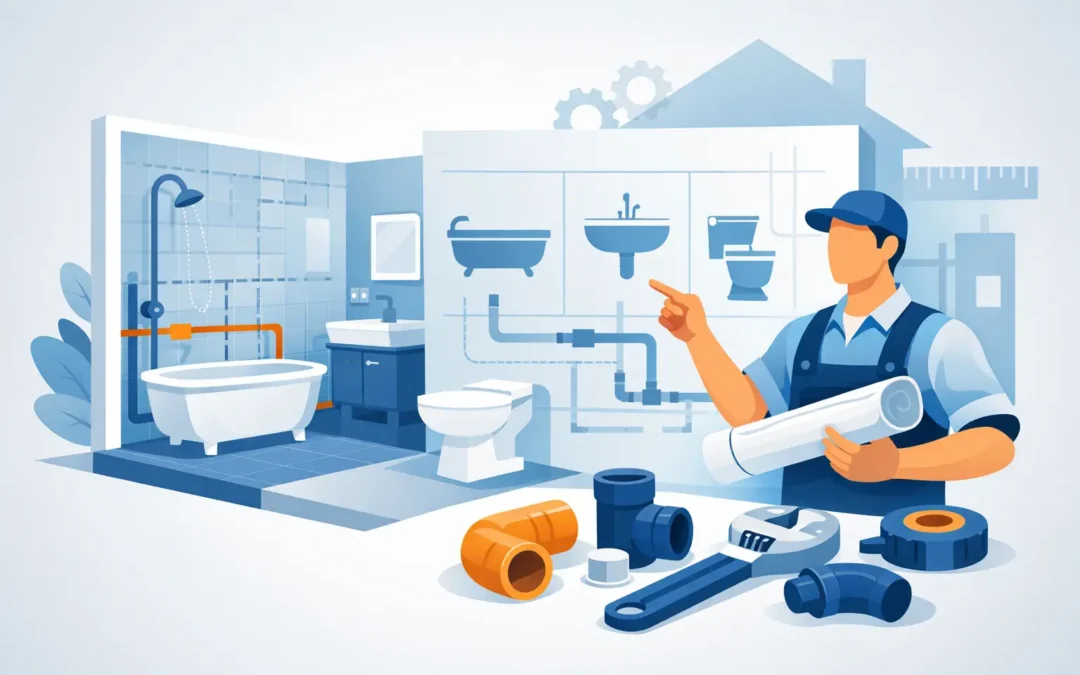
A new bathroom can look straightforward on a showroom plan, but bathroom plumbing is what determines whether it works comfortably for years or causes trouble behind freshly tiled walls. The position of the toilet, basin, shower and bath affects drainage, water pressure, access for future repairs and, ultimately, the cost of the project. Getting these practical details right before work begins avoids expensive alterations later.
For homeowners, landlords and caravan owners around Skegness and the Lincolnshire East Coast, a bathroom should be more than attractive. It needs reliable hot water, effective drainage and fittings installed properly to cope with everyday use.
Start With the Pipework You Already Have
Before choosing a shower enclosure or falling in love with a freestanding bath, assess the existing hot and cold-water supplies and waste pipes. Moving fittings is possible, but it is usually simpler and more cost-effective to retain the same general layout where practical.
A toilet is often the most restrictive item. Its waste pipe needs a suitable route and fall to carry waste away properly. Relocating it across the room may involve lifting floors, altering pipe runs or fitting a pumped solution where gravity drainage is not achievable. Pumped systems can be useful in the right setting, but they introduce an electrical component that needs maintenance and should not be treated as the easy answer to every layout problem.
Baths, showers and basins also need correctly sized wastes and enough fall for water to drain freely. A slow-draining shower is not always a simple blockage issue. It can be caused by poor pipework design, an inadequate fall or a waste route that is too long or restrictive.
Plan Bathroom Plumbing Around How You Live
The best layout depends on who uses the room and how. A family bathroom has different priorities from an en-suite, a rental property or a static caravan. In a busy household, it may be worth allowing room around the basin, choosing easy-clean fittings and making sure the shower has enough pressure when someone else runs a tap downstairs.
Think about practical access as well. Concealed cisterns and wall-hung furniture can create a clean, modern finish, but valves, traps and flushing mechanisms still need to be reachable. An access panel placed carefully during installation can prevent a small repair becoming a disruptive job later.
For older residents or anyone planning to stay in their home long term, a low-level shower tray, sensible grab-rail positions and easy-to-use taps can make a real difference. These choices do not have to make a bathroom feel clinical. They simply make it safer and more comfortable day to day.
Water Pressure Matters More Than Many People Expect
A powerful shower is often high on a wish list, but the result depends on the property’s water system. Mains-fed systems, gravity-fed tanks and combi boilers all behave differently. A large rainfall shower head may look impressive, yet it can disappoint if the available flow rate cannot support it.
This is why the shower should be selected after checking the water supply, not before. In some homes, a suitable thermostatic mixer shower and correctly sized pipework will give an excellent result. In others, changes to the hot-water system, a pump or a different type of shower may be needed. The right answer depends on the property, the existing system and the number of outlets likely to be used at once.
Thermostatic controls are a sensible choice for most family homes. They help keep the shower temperature stable if another tap is turned on, reducing the risk of an unexpected burst of very hot or cold water.
Do Not Underestimate Drainage and Ventilation
Good drainage is quiet, quick and easy to overlook. Poor drainage soon gets noticed. Gurgling noises, lingering smells, repeated blockages and water taking too long to clear are all signs that need attention rather than covering up with stronger cleaning products.
Every basin, bath and shower needs a trap to stop odours coming back through the waste pipe. The trap must remain accessible enough to clean where necessary, particularly beneath basins. Quality installation also means properly supporting pipes, sealing connections and testing the system before walls and floors are closed up.
Ventilation is closely connected to bathroom plumbing, even though it is not pipework. Steam that has nowhere to go leads to condensation, mould and damage to paint, sealant and furniture. An extractor fan should be suitable for the room, vented correctly and used consistently. Opening a window helps, but it may not be enough during cold, damp weather on the coast.
Choose Fittings That Can Be Maintained
There is a trade-off between a minimalist appearance and easy maintenance. Concealed shower valves, built-in toilet frames and boxed-in pipework can look smart, but a future leak or failed cartridge must still be repairable without removing half the bathroom.
Choose reliable fittings and ask where isolation valves will be located. Isolating the basin, toilet or shower supply makes routine repairs much quicker and reduces the chance of having to turn off water to the whole property. Good-quality service valves are a small detail with a worthwhile benefit.
It is also worth considering the finish of taps and shower fittings. Matt black, brushed brass and other specialist finishes can look excellent, but may need gentler cleaning than standard chrome. Harsh limescale removers can damage coatings, while coastal properties may benefit from regular cleaning to prevent deposits building up on shower heads and aerators.
Bathroom Plumbing and Electrical Safety
Bathrooms bring water and electricity into close proximity, so both trades need to be planned together. Lighting, extractor fans, electric showers, shaver points and underfloor heating must be chosen and positioned with bathroom safety zones in mind.
Do not assume an existing circuit is suitable for a new electric shower or electric underfloor heating. These items can place a significant demand on the electrical installation. Planning early allows the electrician and plumber to coordinate pipe routes, cable routes and fitting positions before tiling starts.
If your bathroom project includes a boiler, hot-water cylinder or gas appliance alteration, the work should be carried out by a suitably qualified engineer. Safe, compliant work protects your household and helps avoid problems when selling or letting the property.
Special Considerations for Caravans and Holiday Homes
Bathroom work in a static caravan needs a slightly different approach. Space is tighter, pipe runs are often less accessible and LPG appliances may be part of the wider hot-water arrangement. Materials and fittings need to suit the property, while every connection should be secure enough for a holiday home that may stand empty for long periods.
Winter is the biggest risk. Water left in pipes, taps, showers and appliances can freeze, expand and cause leaks that are only discovered when the caravan is reopened. A proper winter drain-down removes water from hot and cold feeds and protects the system with suitable antifreeze where required. It is a straightforward preventative measure that can save a considerable repair bill.
Annual gas safety checks and regular checks for dripping taps, damaged sealant and slow wastes also help keep a caravan ready for use. Small faults are easier to resolve before they turn into water damage beneath floors or behind furniture.
When to Call a Professional
Replacing a tap washer or clearing hair from a basin waste may be manageable for a confident homeowner. However, persistent leaks, drainage changes, hidden pipework, shower installation, toilet movement and alterations to hot-water systems are jobs where proper experience pays off.
A professional plumber can identify whether a visible problem is the actual cause or only a symptom. For example, a leaking shower may be failed sealant, a cracked tray, loose grout, faulty pipework or water escaping behind the wall. Treating the wrong cause can mean paying twice.
A.C.S Gas Ltd can help with complete bathroom installations, repairs and the plumbing work that sits behind a dependable finished room. Clear advice at the planning stage gives you a better idea of what is practical, what needs changing and where spending a little more now could prevent disruption later.
Before ordering your fittings, arrange a proper assessment of the existing supplies, drainage and hot-water system. A bathroom should feel simple to use every morning – and that starts with the work you cannot see.