
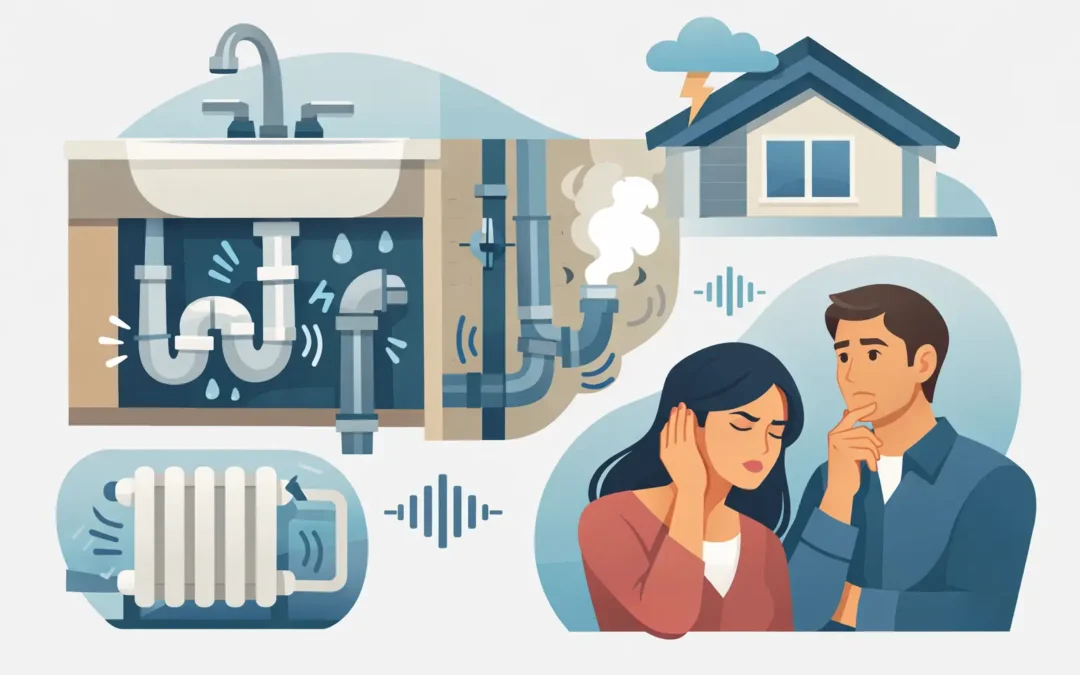
A pipe that bangs as the washing machine fills, whistles when a tap is opened or gurgles after the bath has drained is more than an annoyance. If you are asking what causes noisy pipes, the answer usually lies in water pressure, moving pipework, a worn valve or a developing drainage issue. The sound itself is a useful clue, particularly in homes and static caravans along the Lincolnshire coast where cold weather, seasonal use and older plumbing can all play a part.
Some pipe noises are straightforward to put right. Others need attention before they lead to a leak, reduced water flow or damage to appliances. Here is how to recognise the most common sounds and when it is sensible to call a qualified plumber.
What causes noisy pipes? Start with the sound
Pipes do not all make noise for the same reason. Listening to when the sound occurs can narrow down where the problem is. Does it happen only when a particular tap is used? Is it worse when an appliance switches off? Does it come from beneath the floor, behind a wall or near the boiler cupboard?
A single knock from pipework warming up may be minor. Repeated banging, a high-pitched whistle or persistent gurgling is worth investigating. Avoid turning up the pressure or trying to silence pipes by force, as this can conceal the real fault.
Banging or knocking pipes
A sharp bang when a tap, dishwasher or washing machine valve closes is often called water hammer. Water travelling through a pipe has momentum. When it is stopped suddenly, the pressure wave can make unsecured pipes jump against timber, joists or plasterboard.
High mains pressure makes this more likely, as can modern appliances with fast-closing solenoid valves. Loose pipe clips, worn tap washers and poorly supported pipe runs may all add to the noise. In some cases, an engineer may recommend securing the pipework, adjusting pressure or fitting a suitable water hammer arrestor. The right solution depends on the plumbing layout rather than simply adding parts.
Pipes can also knock as they heat up and cool down. Copper expands slightly when hot water passes through it, then contracts as it cools. Where a pipe is tight against a joist or passes through a small hole, that movement can create a ticking, tapping or knocking sound. It is usually most noticeable after the central heating comes on or when hot water is drawn.
Whistling, squealing or screeching
A whistle usually points to water being forced through a restricted opening. A partly closed stopcock, an ageing tap washer, a faulty fill valve in a toilet cistern or a scaled-up shower valve can all cause it. The sound may begin only at a certain flow rate, which is why it can disappear when the tap is opened fully.
If the noise comes from a boiler or hot-water system, do not assume it is merely a pipe problem. Kettling, which can sound like whistling or rumbling from inside a boiler, may be linked to sludge, limescale, circulation problems or a component fault. Boilers should only be checked by an appropriately qualified Gas Safe registered engineer for gas appliances, or a competent engineer for oil and LPG systems.
Gurgling and bubbling drains
Gurgling from a sink, bath, shower or toilet is normally a drainage issue. Waste water needs air behind it to flow freely. If a trap, waste pipe, soil pipe or vent is partially blocked, air can be pulled through the water in the trap and create a bubbling sound.
A slow-draining basin alongside gurgling is a common sign of a local blockage caused by hair, soap residue or grease. If several fittings gurgle, smell unpleasant or drain slowly at the same time, the restriction may be further along the drainage system. This should be dealt with promptly, especially if water starts backing up.
Never ignore a dry trap either. A trap holds water to stop sewer gases entering the property. In a little-used holiday caravan or a home left empty, that water can evaporate. Running water briefly through sinks, showers and toilets can restore the seal, although recurring smells or gurgling still need checking.
Humming, vibrating and rattling
A low hum or vibration can occur when a pipe is not clipped securely, when a valve is vibrating under pressure or when the pump in a heating system is struggling. Sometimes the noise travels, so the place where you hear it is not necessarily where the fault sits.
Rattling can be as simple as pipework touching a kitchen unit or floorboard. However, it can also be caused by loose internal parts in a tap, radiator valve or appliance. Take note of whether it happens with hot water, cold water, heating or one specific appliance. That information helps an engineer diagnose the issue without unnecessary disruption.
Pressure problems and why they matter
Excessive water pressure is a frequent reason for noisy pipes. It can make taps noisy, worsen water hammer and place extra strain on valves, flexible hoses and appliance connections. A pressure-reducing valve may be appropriate where mains pressure is consistently high, but it needs to be selected and set correctly.
Low pressure can create different noises. Air may be drawn into parts of the system, pumps can become noisy and water may splutter from taps. Low pressure in one outlet may indicate a local blockage or faulty fitting, while poor flow throughout the property could have a wider cause.
For sealed central-heating systems, boiler pressure is separate from mains water pressure. Repeated pressure loss, frequent topping up or water around the boiler should not be ignored. It may indicate a leak, an expansion vessel issue or a pressure relief valve fault. Do not remove boiler casing panels to investigate.
Air in central-heating pipes and radiators
Air trapped in a heating system often causes a trickling, bubbling or rushing-water sound. You may also find that radiators are cool at the top while warm lower down. Bleeding a radiator can release small amounts of trapped air, but it is not always the whole answer.
If air returns regularly, there may be a leak, a faulty automatic air vent, corrosion within the system or an issue with system pressure. Older systems can also collect sludge, reducing circulation and creating uneven heating. A proper assessment can establish whether the system needs balancing, cleaning, inhibitor treatment or repair.
Take care when bleeding radiators. Switch the heating off first, protect nearby flooring, use the correct key and stop as soon as water appears. Check the boiler pressure afterwards if you have a sealed system, following the manufacturer guidance. If you are unsure, arranging a visit is safer than repeatedly adjusting the system.
Noisy pipes in caravans and seasonal properties
Static caravans have compact pipe runs, LPG appliances and periods of non-use, so pipe noise can have a different pattern. A noise after reopening a caravan may be caused by air in water lines, a partially opened isolation valve or movement in pipework after winter temperatures.
Frost damage is a more serious possibility. Water expands as it freezes, and even a small split pipe may not show itself until the system is brought back into use. Look for drips in cupboards, soft flooring, staining, reduced pressure or the sound of water running when all taps are closed.
A correct winter drain-down helps protect hot and cold water feeds from freezing. It is particularly valuable on the East Coast, where an unoccupied caravan can be exposed to prolonged cold spells. Antifreeze protection should only be used where suitable for the system and applied correctly. Gas work, including LPG appliance checks, must always be left to a suitably qualified engineer.
When noisy pipes need urgent attention
Turn off the water supply if there is an active leak or a pipe has burst, then contact a plumber. If water is close to electrics, avoid touching electrical equipment and seek urgent help.
For gas and LPG appliances, a smell of gas, hissing near a gas pipe or appliance, soot marks, unusual burner flames or symptoms of possible carbon monoxide exposure require immediate action. Do not use switches, flames or electrical devices in the affected area. Get outside, follow the emergency gas guidance for your supplier or network, and arrange professional inspection before using the appliance again.
Less urgent noises still deserve attention when they are getting worse, affecting several fittings, causing poor heating or appearing with damp patches. Early repairs are normally simpler and less disruptive than waiting for a visible leak or complete failure.
What you can check before arranging a visit
There are a few safe observations that can help. Note which fitting or appliance triggers the noise, whether it is on hot or cold water, and whether the sound began after recent work, a cold spell or a period away from the property. Check visible pipework for drips and make sure accessible stopcocks and isolation valves are fully open, but do not force a stiff valve.
Avoid dismantling taps, altering boiler settings repeatedly or using chemical drain cleaners in the hope of curing an unknown problem. These measures can damage fittings or make a fault harder to trace. A clear description of the sound and timing gives a local engineer a useful starting point.
Noisy pipes are often your home giving you an early warning. A.C.S Gas Ltd can assess plumbing, heating and caravan water-system concerns clearly and honestly, helping you protect your property before a small sound becomes a larger repair.