
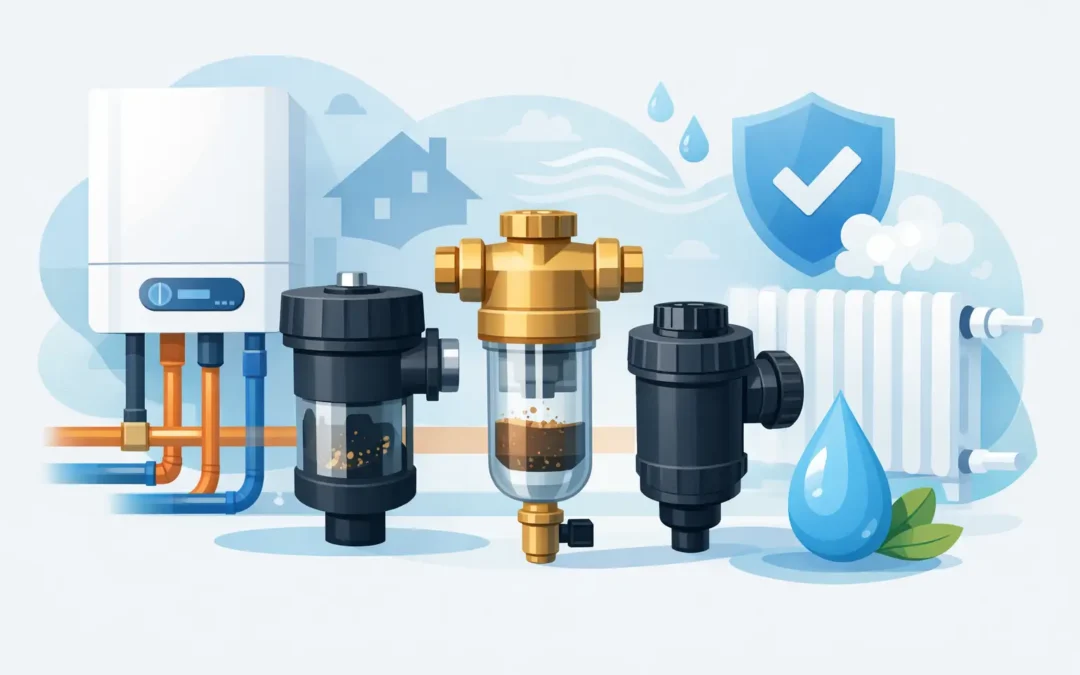
A boiler can be working hard while quietly being damaged by what is moving around inside the heating system. Rust particles, old sludge and scale do not always cause an immediate breakdown, but they can reduce heat output, make radiators slow to warm up and put extra strain on pumps and valves. The best boiler filters help catch that debris before it reaches the boiler’s most sensitive parts.
For homeowners, landlords and caravan owners around Skegness and the Lincolnshire East Coast, a filter is usually a practical addition rather than an optional extra. It can help protect a new boiler, support efficient heating and reduce the risk of avoidable faults. The right choice depends on your system, water quality and the condition of the pipework already in place.
What does a boiler filter actually do?
A boiler filter, often called a central-heating filter or magnetic filter, is fitted to the return pipe leading back to the boiler. This is the route through which water from the radiators comes back into the appliance. By placing the filter there, it can collect contamination before that water circulates through the boiler again.
The main culprit is magnetite: a fine, black iron oxide sludge created when metal components inside a heating system slowly corrode. It can settle in radiators, narrow waterways and collect in pumps, heat exchangers and valves. Modern boilers are efficient, but their internal waterways can be relatively small, so they need clean system water to work as intended.
A good filter catches magnetic debris and, in many cases, non-magnetic particles too. It needs to be cleaned as part of regular boiler servicing. A filter is not a substitute for servicing, chemical inhibitor or a proper system clean where one is needed. It works alongside them.
The best boiler filters: what to look for
There is no single filter that is right for every property. The best boiler filters are those correctly sized, properly fitted and suitable for the heating system they are protecting. Brand matters less than choosing a proven unit that can be serviced easily and installed without creating poor pipework or access problems.
Magnetic filters for most central-heating systems
For many homes, a magnetic filter is the most useful choice. It contains a powerful magnet that attracts magnetite as water passes through. During a service, the engineer removes or isolates the magnet and flushes the collected debris out safely.
This type of filter is particularly worthwhile when a new boiler is being installed onto an existing radiator system. Even if the radiators appear to heat up well, older systems can contain years of settled debris. Cleaning and protecting the system at installation gives the new boiler a better start.
Look for a model with strong magnetic collection, a straightforward cleaning process and enough room around it for future servicing. A filter buried behind boxing, kitchen units or a tight cupboard may be technically fitted, but it will be far less convenient to maintain.
Magnetic and non-magnetic particle protection
Some filters combine a magnet with a physical separator or mesh. This helps catch non-magnetic debris such as limescale fragments, solder particles, grit and other sediment. These can be useful on systems where contamination is mixed rather than purely magnetic.
This does not mean every property needs the most complex filter available. A more sophisticated unit may cost more and can still only perform well if it is cleaned regularly. For a straightforward domestic system in good condition, a quality magnetic filter and correct water treatment may be the sensible balance.
Limescale protection in hard-water areas
Limescale is different from heating-system sludge. It is created when hard water is heated, particularly in domestic hot-water parts of a system. A magnetic central-heating filter does not automatically solve a scale issue.
Where hard water is a concern, an engineer may recommend a separate scale-reduction measure for the incoming water supply or advise on the best approach for the specific boiler and hot-water arrangement. The correct answer depends on whether you have a combi boiler, a hot-water cylinder or another type of system. It is worth avoiding products that promise to solve every water-quality problem in one go.
Filters for older or dirty systems
If radiators have cold patches, boiler water is discoloured, the system has frequent circulation faults or a pump has failed, fitting a filter alone may not be enough. The debris already sitting in the system needs attention first.
In these cases, a system clean may be recommended before or alongside filter installation. This could involve flushing the system, cleaning individual radiators where necessary, adding inhibitor and then fitting a filter to collect contamination that develops over time. It is a more thorough approach, but often makes better sense than fitting a new filter onto a heavily sludged system and hoping for a quick fix.
When a boiler filter is most worthwhile
A filter can benefit most wet central-heating systems, but there are times when it makes particular sense. New boiler installations are an obvious example, especially where existing radiators and pipework are being retained. It is also worth considering after a powerflush or repair work that has disturbed the system.
Landlords may find that good system protection helps support reliable heating between inspections and tenancies. It does not replace an annual gas safety check or boiler service, but it can reduce the chance of contaminants contributing to a breakdown at an inconvenient time.
For static caravans with a wet central-heating system, the same principle applies: the filter protects the circulating heating water, not the LPG supply. Caravan systems often have limited space, so access and correct installation are especially important. Winter drain-downs and antifreeze protection are separate jobs, but both are part of looking after a caravan heating system through the colder months.
A filter will not fix every boiler fault
It is easy to assume that any heating issue is caused by sludge. Sometimes it is. But a boiler that loses pressure, makes unusual noises, produces no hot water or repeatedly locks out may have a different problem, such as a leak, expansion vessel fault, fan issue, ignition fault or defective control.
Similarly, cold radiators may be caused by trapped air, stuck valves, balancing issues or a circulation problem. A qualified engineer should identify the cause before recommending work. Honest diagnosis matters because a filter is a protective measure, not a cure-all.
Fitting and maintaining a boiler filter properly
A filter should be fitted in the correct position and in line with the manufacturer’s instructions. The system may need to be isolated, drained down in part and refilled correctly afterwards. Once installed, it should be accessible for cleaning and checked for leaks.
The filter should then be inspected during annual boiler servicing. The engineer can remove collected debris, check the system condition and make sure inhibitor levels remain suitable. If a filter fills quickly after installation, that may indicate a larger amount of contamination in the system and a more detailed clean could be needed.
It is also sensible to keep a record of when the filter was fitted and cleaned. This is useful for householders, landlords managing maintenance records and anyone planning to sell or upgrade a property later.
Choosing advice over a box on the shelf
The cheapest filter is not always the best value, and the largest or most feature-heavy model is not automatically necessary. The right option is one that protects your particular boiler, suits the pipework and can be maintained without difficulty.
At A.C.S Gas Ltd, the focus is on explaining what the heating system needs in plain terms, whether that means a filter, a clean, a repair or simply regular servicing. A properly protected system gives your boiler a better chance of providing dependable warmth when you need it most.