
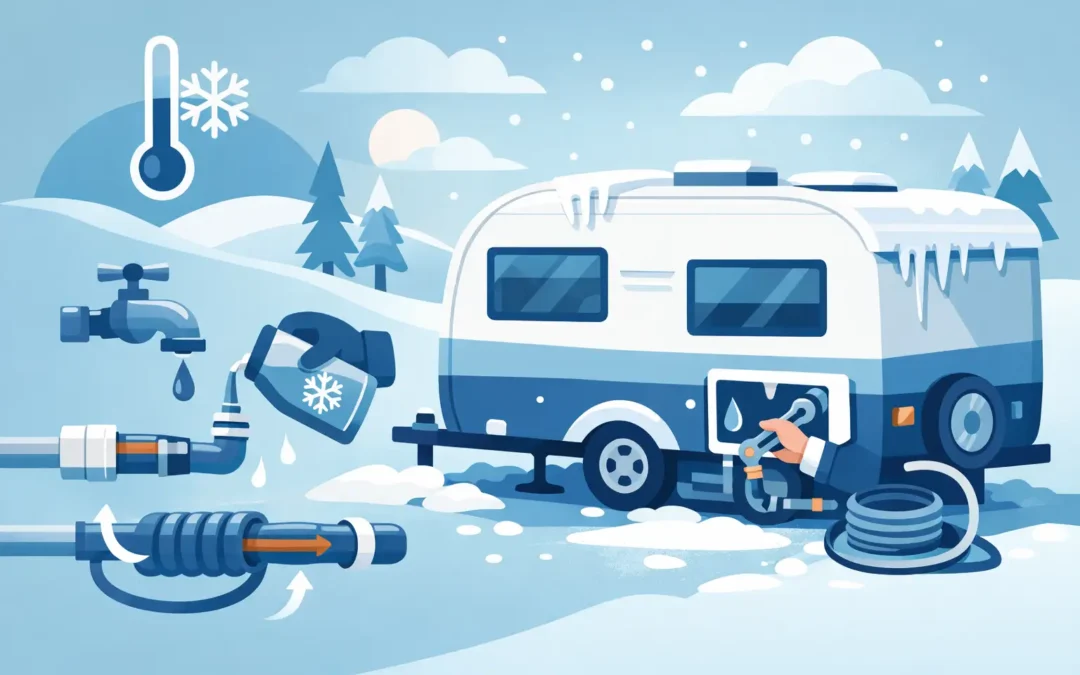
A hard frost on the Lincolnshire coast can do more than leave a caravan feeling cold. Water trapped in a pipe, pump or heater can freeze, expand and split components that may not show the damage until the caravan is opened again. Knowing how to prepare caravan plumbing before a seasonal closure helps protect your holiday home, avoid an unwelcome leak and keep recommissioning straightforward when warmer weather returns.
For static caravans, a proper winter drain-down is usually the safest approach when the property will be empty and unheated. The exact process depends on the caravan layout, its water heater and whether it has a sealed or open water system, so always follow the appliance and caravan manufacturer guidance where it differs.
Decide whether to drain down or maintain heat
The first decision is whether the caravan will be left heated through winter. Keeping a low background temperature can reduce the chance of freezing, but it is not a guarantee. A power cut, LPG supply issue, boiler fault or unusually severe cold spell can still leave pipework vulnerable.
A full drain-down is generally the more dependable option for caravans that will be unoccupied for weeks or months. It removes the water that causes frost damage rather than relying entirely on the heating system. It is particularly sensible for holiday homes closed after the season, or for owners who cannot visit regularly to check the caravan.
If you plan to keep heating on, check that the system is working properly, the frost-protection setting is enabled where fitted, and the caravan is adequately ventilated. Do not block fixed air vents in an attempt to keep warmth in. They are there for safe operation of LPG appliances and to help prevent condensation.
How to prepare caravan plumbing before a drain-down
Start while there is still enough daylight and before temperatures drop close to freezing. Turn off the caravan’s incoming water supply at the stop tap or external connection point. If you use a water container or aquaroll-style supply, disconnect it and empty it completely. Leaving water in the container, hose or connector can cause just as much trouble as leaving it in the caravan.
Next, turn off the water heater in line with its instructions. Never drain a water heater while it is hot or pressurised. Allow it to cool first, then isolate its power supply if required. Electric water heaters must not be switched on when empty, as this can damage the heating element.
Open every hot and cold tap inside the caravan, including the kitchen sink, bathroom basin and shower. Put the taps in the middle position where mixer taps are fitted so both sides of the system can empty. Flush the toilet and open any drain points installed by the manufacturer. A shower mixer can retain water even when the taps are open, so remove the shower head and lower the hose into the tray where possible.
Many static caravans have low-point drain valves beneath the unit or within a service cupboard. Opening these is often necessary to empty the pipework properly. Water should flow freely, but do not assume the job is complete simply because it has stopped dripping. Low sections of pipe, flexible hoses and appliances can still hold pockets of water.
Empty the water heater, pump and hidden pipework
The water heater needs particular attention because it contains a larger volume of water than the pipework. Use the appliance’s designated drain valve or drain procedure. Do not remove covers, force fittings or improvise with valves that you are unsure about. Incorrect draining can damage seals and safety devices, and gas appliances should only be worked on by a suitably qualified engineer.
If your caravan has a pump, follow the manufacturer instructions to drain it. Some systems need the pump briefly operated after the supply is disconnected to clear residual water, while others should not be run dry. This is one of those cases where the right method depends on the make and model.
Check other places where water may remain: washing machine connections, dishwasher feeds, external taps, filter housings and water-fed fridge dispensers where fitted. Disconnecting a hose or opening a drain point may be enough, but some appliances have their own winterisation instructions. Landlords and owners of larger holiday lets should make this part of a recorded end-of-season routine, rather than relying on memory.
Once the system has drained, leave internal taps open. This gives any small amount of remaining water room to expand and helps prevent pressure building in a closed section of pipe. Empty and clean the shower tray, sinks and bowls as well, as standing water adds unnecessary dampness to a closed caravan.
Protect waste pipes and traps
Fresh-water pipes are only half the job. Waste traps beneath sinks, basins and showers hold water by design, preventing odours from coming back up through the waste pipe. That water can freeze too.
Use a suitable non-toxic plumbing antifreeze designed for caravan or recreational vehicle waste systems if recommended for your caravan. Add it to sink, shower and basin waste outlets so it reaches the traps. Do not pour ordinary vehicle antifreeze into the plumbing system. It is toxic and is not suitable for drinking-water systems, waste disposal or the caravan environment.
The toilet needs its own check. Empty the flush reservoir or cassette as appropriate, and use only products approved for that toilet system. Keep the toilet valve and seals clean, as a small leak can allow water to refill a section you believed was drained.
Do not overlook LPG appliances and ventilation
Preparing caravan plumbing often happens alongside shutting down the gas and heating appliances, but the two jobs should not be confused. Water can be drained by a competent owner following the caravan guidance. LPG appliances, pipework, regulators and gas safety checks need the right competence and equipment.
Before closing the caravan, turn off appliances as instructed and ensure the LPG cylinders, regulator and pipework are in good order. Check for signs of damage, corrosion or perished hoses. Do not test for leaks with a flame. If you smell gas, suspect a fault or are unsure whether an appliance has been safely isolated, arrange professional help rather than returning to the caravan later and hoping for the best.
Fixed vents must remain clear throughout winter. Condensation is a common cause of mould and damage in caravans, and closing vents can also create a serious safety risk when gas appliances are used again.
Check the caravan after the work is complete
A final walk-round is worthwhile. Check that the incoming water is isolated, hoses and external fittings are empty, taps are left open and drain valves are in the required position for winter. Make a note of anything that needs attention before spring, such as a stiff valve, a dripping connection or an appliance due for service.
If your caravan is on a holiday park, also check its winterisation rules. Some sites require drain-downs by a particular date or ask owners to use an approved contractor. They may have site-specific arrangements for water supplies, isolation points and LPG access.
For owners who want the reassurance of a thorough job, A.C.S Gas Ltd provides caravan winter drain-downs and gas safety support across Skegness and the Lincolnshire East Coast. An experienced engineer can drain hot and cold feeds correctly, protect vulnerable parts of the system and identify faults that might otherwise become apparent only when the caravan is reopened.
Recommission carefully in spring
When it is time to use the caravan again, close drain valves, reconnect the water supply and fill the system slowly. Keep taps open until water runs steadily, first on the cold side and then on the hot side. Check under sinks, around the water heater, behind the toilet and at external connections for leaks before putting the caravan back into normal use.
Only restore power to an electric water heater once it is fully filled. For LPG water heaters and heating appliances, follow the lighting procedure carefully. If there has been a very cold winter, or you find damp patches, a loss of pressure or poor water flow, stop and have the system checked.
A caravan should be ready for a relaxing break, not a repair list. Taking the time to drain it down properly before winter is a practical way to protect the plumbing, the heating system and the holidays you are looking forward to next season.