
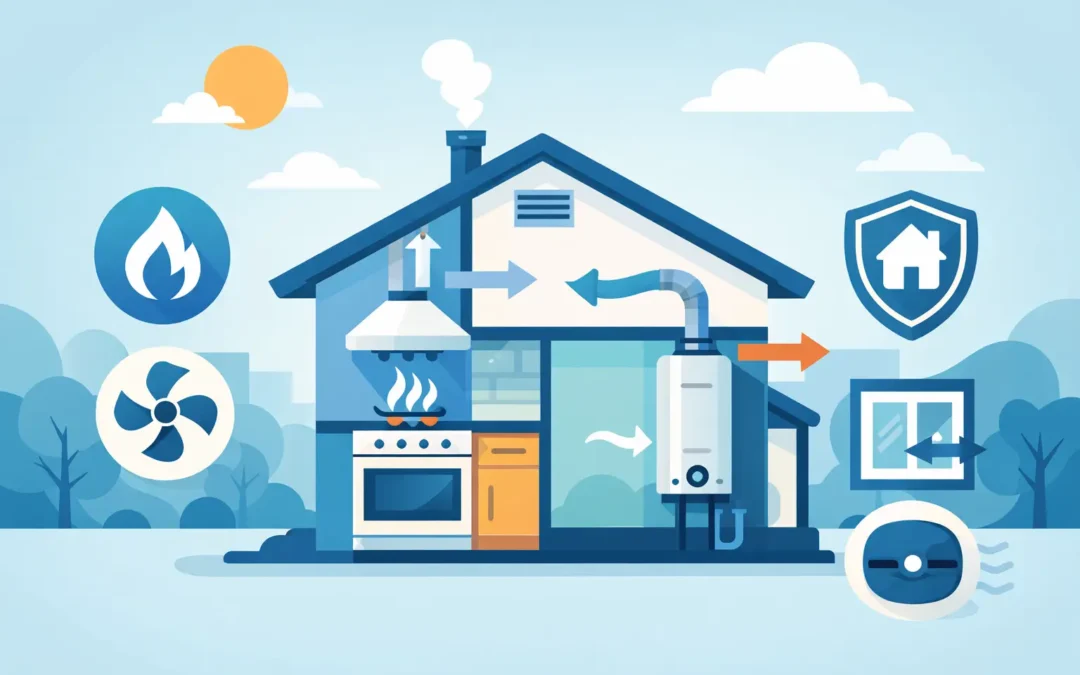
A vent can look like a small grille in a wall, door or floor. It may be easy to overlook, especially in a room you are trying to keep warm. But it can be a vital part of how a gas appliance operates safely. This gas appliance ventilation guide explains what householders, landlords and caravan owners need to know, without turning a straightforward safety check into a technical puzzle.
Gas appliances need the right conditions to burn fuel properly. Where an appliance is designed to take air from the room, fixed ventilation helps provide that air and allows the appliance to work as intended. Blocking or covering a purpose-made vent can increase the risk of incomplete combustion and carbon monoxide production.
Why gas appliance ventilation matters
Natural gas and LPG appliances burn fuel to produce heat. For safe, efficient combustion, they need an adequate supply of oxygen and a safe route for combustion products to leave the property. The arrangement depends on the appliance, its location and the type of flue or chimney serving it.
Older gas fires, open-flued boilers, some water heaters and certain cookers may rely on air from the room. A fixed air vent may therefore be required by the installation standards and the appliance manufacturer’s instructions. It is not there to create a draught for the sake of it. It is part of the appliance’s safety arrangement.
Modern room-sealed boilers work differently. They usually draw combustion air from outside and discharge flue gases outside through a sealed flue system. They do not normally need a ventilation grille in the room for combustion air. However, the boiler cupboard, flue route and clearances must still meet the manufacturer’s requirements. Never assume that a vent is unnecessary simply because an appliance seems modern.
The key point is that ventilation is specific to the appliance and installation. A qualified Gas Safe registered engineer can establish what is required and whether a vent, flue or air supply has been altered incorrectly.
Which appliances are most likely to need fixed ventilation?
The answer depends on the appliance’s design, size and location, rather than its age alone. Open-flued appliances are the most common reason for fixed ventilation, because they take combustion air from the room. A gas fire installed into a traditional chimney opening may also need permanent ventilation, particularly where the chimney or flue arrangement calls for it.
LPG appliances in static caravans deserve particular care. Caravans are compact, often well sealed, and may be left unoccupied for long periods. LPG is heavier than air, so appliance installation, cylinder arrangements and low-level ventilation must be considered carefully. Caravan vents should not be taped over or packed with insulation during winter preparations.
Kitchen appliances can also require suitable ventilation, though there is a difference between ventilation for combustion safety and an extractor hood used to remove steam, grease and cooking smells. An extractor is useful for the kitchen, but it is not automatically a replacement for a required permanent air vent.
Do not block vents to stop draughts
A cold draught from a wall vent is frustrating, particularly during a Lincolnshire winter. The temptation is to cover it with tape, a cushion, furniture, loft insulation or a magnetic cover. This is not a safe fix where the vent forms part of a gas appliance installation.
The same applies to air bricks outside the property. Leaves, soil, stored garden items, paint and insect nests can restrict airflow. Internal vents can become blocked by carpets, cabinets, curtains or belongings moved during decorating. In caravans, luggage, cushions and seasonal storage can easily cover low-level vents.
If a vent feels uncomfortable, arrange for an engineer to assess the appliance and ventilation provision. There may be a safe way to improve comfort, such as checking the appliance, reviewing draught-proofing around other gaps or considering an appliance upgrade. The answer is not to reduce the air supply without knowing why it is there.
Warning signs that need prompt attention
You cannot see or smell carbon monoxide, so a room can appear normal even when there is a serious issue. That is why prevention, servicing and a working carbon monoxide alarm are so worthwhile.
Arrange professional advice promptly if you notice yellow or lazy flames instead of crisp blue flames on a gas appliance, black marks or staining around an appliance, excessive condensation, a pilot light that repeatedly goes out, or a new smell from a flue or appliance. Headaches, dizziness, nausea, breathlessness and unusual tiredness can also be symptoms of carbon monoxide exposure.
If you suspect carbon monoxide, turn off the appliance if it is safe to do so, open doors and windows, get everyone into fresh air and seek urgent medical advice. Do not use the appliance again until it has been checked by a Gas Safe registered engineer. If there is an immediate gas emergency, follow the gas emergency advice for your supply and contact the appropriate emergency service.
A carbon monoxide alarm provides an essential extra warning, but it does not replace correct ventilation, a sound flue or regular servicing. Fit alarms in line with the manufacturer’s instructions, test them regularly and replace them at the end of their stated working life.
A practical gas appliance ventilation guide for your property
You do not need to dismantle an appliance or try to measure airflow yourself. A sensible visual check can identify obvious problems and help you know when to call for assistance.
First, look at visible fixed vents and air bricks. They should be open, clean and free from furniture, boxes, plant growth or decoration. Do not fit covers over them unless a qualified engineer has confirmed that the vent is no longer needed.
Next, check around the appliance. Keep the manufacturer-recommended clearances free of stored items, especially in boiler cupboards. Do not dry clothes over a gas fire or use an appliance space as general storage. For a gas fire, make sure the chimney or flue terminal outside is not visibly obstructed.
Then consider recent changes to the home. New windows, external wall insulation, kitchen refits, replacement fireplaces and blocked chimneys can all affect an existing gas installation. A renovation that makes a room warmer and less draughty can also change the ventilation conditions that an older appliance relied upon.
Finally, make servicing part of the plan. An annual service allows an engineer to inspect the appliance’s operation, flueing and safety controls. Landlords must arrange the required annual gas safety checks and provide the appropriate record. Homeowners and caravan owners benefit from the same regular attention, particularly before winter or before a holiday home is brought back into use.
Ventilation in boilers, fires and caravans
Boilers and boiler cupboards
A modern room-sealed boiler should be installed to its instructions, including access for servicing and any cupboard ventilation specified by the manufacturer. Do not add extra vents, box in flues or alter cupboard doors without checking first. Incorrect boxing can make servicing difficult and may conceal problems that should be visible.
If you have an older open-flued boiler, ventilation and flue performance are especially important. Replacing it with a modern condensing boiler can improve efficiency and may change the ventilation requirements, but the right option depends on the property, pipework and available flue route.
Gas fires and chimneys
Gas fires need careful attention because their flue may use a chimney that is rarely inspected from the outside. A blocked chimney, a poorly fitting closure plate or an inadequate air supply can affect safe operation. Do not assume a fire is safe because it lights and produces heat. Servicing checks the details that are not obvious from the sofa.
Static caravans and LPG
For caravan owners, ventilation checks should be part of the annual gas safety visit and winter close-down routine. Keep fixed vents clear, check that appliance flues are unobstructed, and never store bedding or equipment against vents. LPG systems need engineers with the right competence, as the appliances, regulators, pipework and confined space of a caravan bring their own requirements.
A.C.S Gas Ltd can assess gas and LPG appliances across the Lincolnshire East Coast, explain any findings clearly and carry out the work needed to keep your property or caravan safe and comfortable.
When to call a qualified engineer
Call an engineer if you are unsure why a vent is present, if you want to alter a room containing a gas appliance, or if a vent has been covered for any length of time. It is also sensible to arrange a check after building work, a new fireplace, replacement windows or a change from one appliance to another.
Ventilation is not an area for guesswork. The right answer may be as simple as clearing an air brick, or it may involve checking a flue, correcting an installation or planning a replacement appliance. A clear explanation from a qualified engineer gives you a safer home without unnecessary work.
If a vent is bothering you or an appliance does not seem right, leave it uncovered and ask for it to be checked. A prompt inspection can protect the people using your home, your tenants or your caravan long before a small concern becomes an urgent problem.