
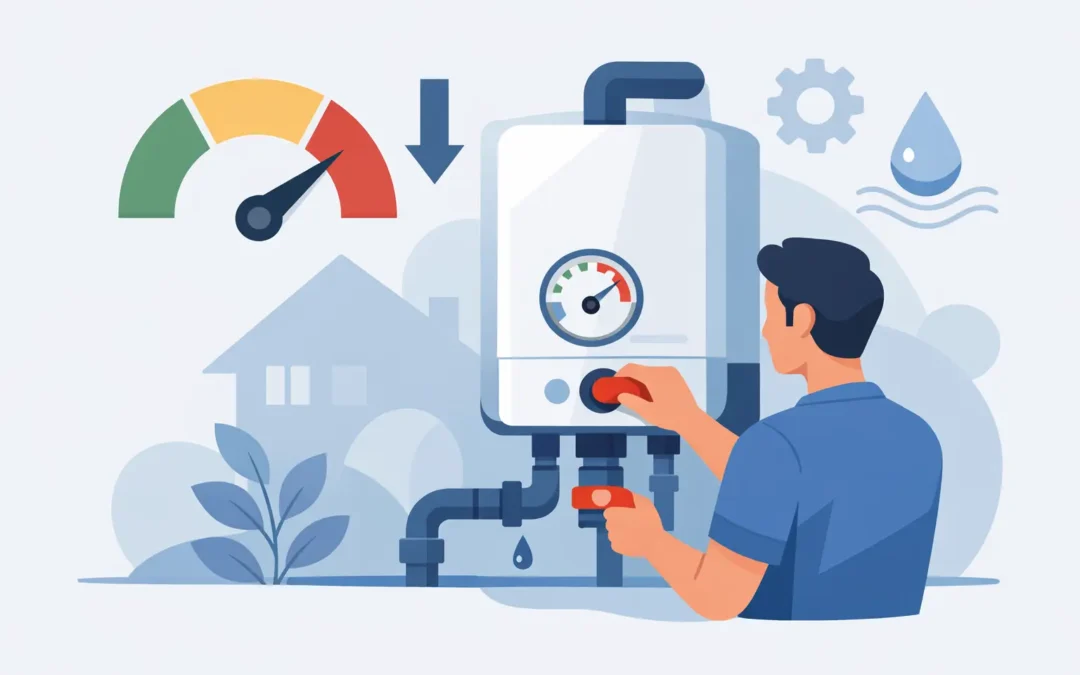
A boiler pressure gauge sitting close to 3 bar can be worrying, particularly when you rely on your heating and hot water during a cold spell. Knowing how to reduce boiler pressure can help with a simple, one-off rise on many modern sealed central-heating systems – but it is equally important to know when to stop and arrange a qualified engineer.
Most homes with a combi boiler or a sealed system will have a pressure gauge or digital display. It tells you how much water is in the heating circuit, not the pressure of your gas supply. A small change as the system warms up is normal. A reading that repeatedly climbs into the red is not something to ignore.
What Boiler Pressure Should Be
For many sealed heating systems, the pressure should usually be around 1 to 1.5 bar when the boiler and radiators are cold. Once the heating is running, it may rise towards 2 bar. The exact recommended range can vary by boiler manufacturer and system design, so check the instructions for your appliance if they are available.
A reading near or above 3 bar is generally too high. At this point, the boiler’s pressure relief valve may discharge water outside through a copper pipe, often close to an external wall. You may notice dripping or a puddle beneath it. This valve is a safety feature, but water escaping from it should not be treated as a normal part of using your heating.
Not every property has the same setup. Older open-vented systems, some oil-fired systems and caravan installations may be arranged differently. If you cannot identify a filling loop or are unsure what type of system you have, do not start opening valves at random.
How to Reduce Boiler Pressure Safely
Before doing anything, turn the heating off and allow the boiler and radiators to cool. Hot water can cause scalding, and a pressure reading taken on a hot system can be misleading. Switch the boiler off at its controls rather than isolating any gas supply.
First, look beneath the boiler for the filling loop. This is often a short flexible braided hose with one or two small taps or levers, although some newer boilers have an internal filling key or filling control. Both valves should be fully closed when the system has been topped up. If a filling loop has been left slightly open, it can continuously add water and raise the pressure.
If the filling controls are definitely closed and the pressure is still too high, releasing a small amount of water from a radiator can bring it down. Choose a radiator that is easy to reach and use a radiator bleed key, with an old towel and small container held below the bleed valve. Turn the key slowly anti-clockwise just enough for water to begin escaping. You may hear air first, particularly if the radiator needs bleeding.
Watch the pressure gauge while you do this. Once the reading drops into the normal cold range, close the bleed valve carefully. It only needs to be snug – overtightening can damage the fitting. Wipe away any water, check the valve is not dripping, and then restart the boiler once everything is dry.
It is better to release a little water and check the gauge than to rush. Removing too much water can leave the pressure too low, which may stop the boiler working and require the system to be repressurised.
Do Not Use a Radiator Valve by Mistake
The bleed valve is the small square fitting usually found at the top corner of a radiator. Do not loosen the larger valves at the bottom of the radiator, as these control water flow and can cause a more significant leak if disturbed. If the bleed screw is seized, damaged or difficult to access, leave it alone and seek help.
Avoid removing boiler panels or attempting to adjust internal components. There are electrical parts inside the appliance, and gas boilers must only be worked on by a Gas Safe registered engineer. LPG systems, including those in static caravans, also need the right experience and safety checks.
Why Does Boiler Pressure Keep Rising?
A single high reading can happen after a system has been topped up and the filling loop was not fully shut. It can also occur if someone has added more water than needed after bleeding radiators. In those cases, carefully reducing the pressure may resolve the immediate issue.
Repeated high pressure points to a fault that needs investigating. One common cause is a worn or failed expansion vessel. This component allows for the natural expansion of water as it heats. When it is not working correctly, pressure can climb sharply every time the heating comes on, then fall again once it cools.
A passing filling-loop valve can also allow water into the system even when it appears closed. In some cases, an issue with an internal filling mechanism or heat exchanger may be involved. These faults cannot be confirmed by looking at the gauge alone, and simply releasing water will not provide a lasting repair.
If water is regularly coming from the pressure relief pipe outside, do not cap the pipe, block it or ignore it. The valve may have opened to protect the system, but it can sometimes fail to reseat properly afterwards. An engineer can identify why the pressure rose, test the expansion vessel and make sure the boiler is operating safely.
Signs You Should Call an Engineer
Arrange professional help if the pressure returns to 3 bar after you have reduced it, if the boiler displays a fault code, or if you see water leaking from the boiler, radiators or pipework. You should also call an engineer if the boiler pressure drops very low after you release water, as a loss of pressure can indicate a separate leak.
Other warning signs include banging or gurgling noises, radiators that repeatedly need bleeding, an overflow pipe that drips whenever the heating runs, or a boiler that switches itself off. A boiler may still produce heat with one of these symptoms, but continuing to run it can risk further damage and leave you without heating or hot water when you need it most.
For landlords, a pressure issue should be dealt with promptly, particularly where tenants have lost heating or hot water. It is also sensible to keep servicing and safety documentation up to date. For static-caravan owners, pressure and heating concerns should be assessed before long periods of winter closure, alongside proper drain-down and frost protection where required.
Preventing Pressure Problems
Check the pressure gauge occasionally when the system is cold, especially after a radiator has been bled or any plumbing work has been completed. You do not need to monitor it daily, but spotting a gradual change early can prevent a breakdown later.
Keep the filling loop closed after topping up. If yours is a detachable braided hose, it may be best stored safely after use where your boiler instructions allow. This reduces the chance of accidental overfilling and makes it easier to see whether a valve is passing.
Annual boiler servicing is another practical safeguard. A service is not only about keeping the appliance within manufacturer requirements. It gives an engineer the opportunity to inspect the boiler’s operation, look for signs of leaks or poor pressure control, and help keep your heating reliable through the colder months.
A.C.S Gas Ltd can assess recurring boiler-pressure problems across Skegness and the Lincolnshire East Coast, explain the findings clearly and carry out the right repair where needed. A small adjustment may be all that is required, but a pressure gauge that keeps climbing is your boiler’s way of asking for attention – dealing with it early is the safer, less disruptive choice.