
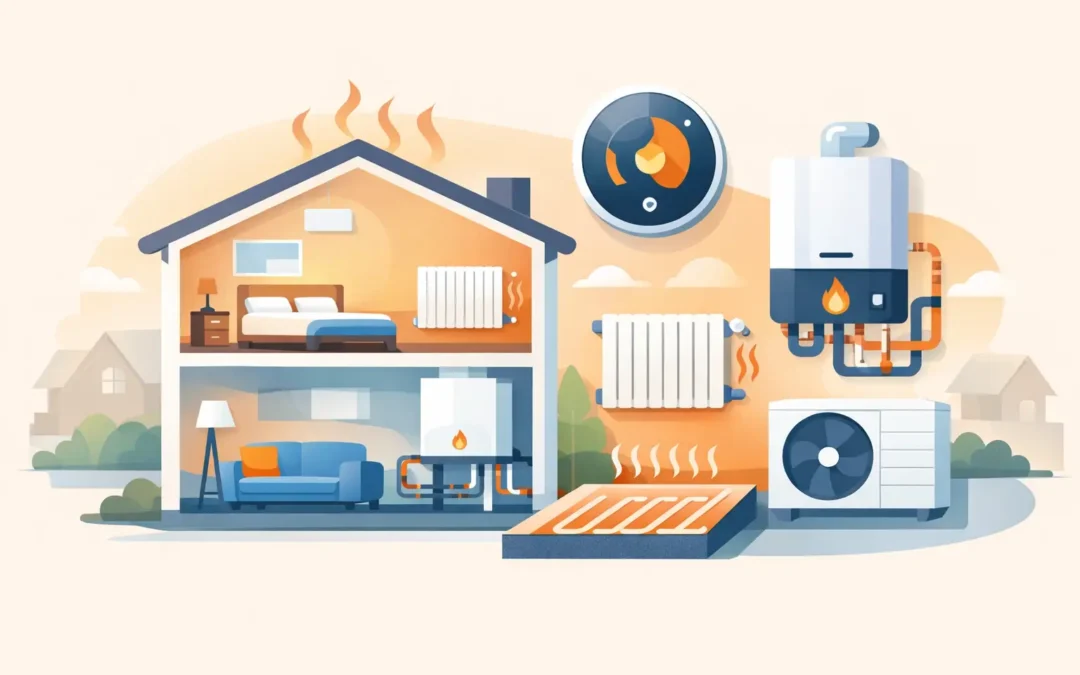
A boiler that still fires up is not necessarily a heating system that is working well. If some rooms are slow to warm, radiators need constant bleeding, or your bills have crept up without a clear reason, central heating upgrades may make a real difference. The right work can improve comfort room by room, reduce wasted energy and give you more confidence when the weather turns on the Lincolnshire coast.
The best upgrade is not always a complete replacement. In some homes, a modern boiler and better controls are the sensible answer. In others, the boiler is sound but the pipework, radiators or system water are holding it back. A proper assessment helps you spend money where it will have the greatest effect.
Start with how your home actually feels
Think beyond the boiler itself. Is the living room warm but the back bedroom cold? Does the system take a long time to respond when you turn the heating on? Are some radiators hot at the top and cool at the bottom? These are useful clues, and they can point to different causes.
Cold patches may be caused by sludge in radiators, an undersized radiator, poor balancing or an older heating layout that no longer suits how the property is used. A home office in a converted box room, for example, may need more heat than it did when it was simply a spare room. Extending a property, fitting new windows or changing insulation can also alter the way heat moves through the house.
An engineer should look at the complete system: boiler output, controls, radiators, valves, pipework, circulation and system condition. This avoids the common mistake of fitting a new boiler to a tired system and expecting it to solve every issue on its own.
Central heating upgrades worth considering
A modern boiler where replacement is due
If a boiler is unreliable, costly to repair or approaching the end of its useful life, replacement can bring better efficiency and dependable heating. Modern condensing boilers recover more heat from the fuel they use, but their real-world performance depends on correct installation, suitable controls and a clean, well-balanced system.
Choosing the largest boiler is rarely the answer. An oversized boiler can cycle on and off too often, while an undersized model may struggle during cold spells. The right size depends on the property, number of bathrooms, hot-water demand, insulation and the heating system already in place. Natural gas, LPG and oil systems each need the appropriate expertise and equipment.
For households planning a larger investment, it can be useful to ask about available boiler-finance options as well as the installation itself. The important thing is to understand the total cost, the proposed equipment and what work is included before making a decision.
Better heating controls
Controls are often the most overlooked part of a heating upgrade. A reliable boiler can still waste energy if it is heating an empty house or running at a higher temperature than necessary.
A programmable thermostat lets you set heating times around your routine, while smart controls can make changes easier when your plans change. Thermostatic radiator valves give individual rooms more control, so a spare bedroom does not need to be heated to the same level as the lounge.
Controls need to be set up properly. A system that is programmed too aggressively may leave a home cold when it is needed, while one that runs for long periods without adjustment can waste fuel. The aim is steady, comfortable warmth rather than repeatedly turning the heating fully on and off.
Radiator replacement and improved distribution
Older radiators may be too small for the room, internally restricted or simply inefficient compared with newer options. Replacing selected radiators can be particularly worthwhile in rooms that never feel warm enough, even when the rest of the house is comfortable.
Before fitting new radiators, it is sensible to check the heat requirement of each room. Large glazing areas, exposed walls and rooms above garages can all need more output. Decorative radiator styles can work well, but they still need to provide enough heat for the space.
New thermostatic valves and proper balancing can make a noticeable difference too. Balancing ensures the heat is shared fairly around the property, rather than allowing the nearest radiators to take most of it while rooms further away stay cool.
Cleaning and protecting the system
Dirty heating water is a common cause of poor circulation, noisy boilers and radiators that are hot at the top but cooler below. Sludge and debris can build up over time, particularly in older systems. Cleaning may involve a powerflush or another suitable method, depending on the condition of the system.
This is not a one-size-fits-all job. A careful engineer will assess whether cleaning is appropriate and whether there are any weak points in older pipework or radiators. Once the system is clean, a magnetic filter can help catch debris before it reaches the boiler, while inhibitor helps protect against future corrosion.
These measures can support a new boiler installation, but they are also useful where the boiler itself is in good condition and the system needs attention.
Underfloor heating for selected spaces
Underfloor heating can be an excellent option for bathrooms, kitchens, extensions and open-plan areas. It creates gentle, even warmth and frees up wall space that would otherwise be taken by radiators. It is especially popular as part of a wider renovation, where floors are already being lifted or replaced.
The trade-off is that installation can be more involved than changing radiators, particularly in an existing room. Floor height, insulation, the type of floor finish and the heat source all need consideration. For some homes, underfloor heating is best used alongside radiators rather than throughout the entire property.
Do not overlook the pipework and hot water
A heating system is only as good as the route heat takes around the home. Older or altered pipework can restrict flow, while poorly insulated pipes lose heat in cupboards, loft spaces and unheated areas. Leaks, pressure loss and repeated air in the system should be investigated rather than treated as normal.
Hot water also matters when planning an upgrade. A combi boiler can suit many smaller homes with modest hot-water demand. Larger households, or homes with several bathrooms used at the same time, may be better served by a system boiler and cylinder. There is no universal best choice – it depends on how the household uses water each day.
Plan upgrades around your property and budget
You do not have to do everything at once. A phased approach can be practical: resolve circulation issues and fit controls first, then replace radiators as rooms are renovated, or plan a boiler change when repairs are no longer economical. A free, no-obligation quotation should set out the recommended work clearly, including any preparation, system cleaning and controls.
For landlords, heating upgrades should sit alongside annual gas-safety responsibilities and regular servicing. A safe, maintained system is less likely to let a tenant down in winter, and prompt attention to faults helps protect both the property and the people living in it.
Static caravan owners have additional considerations. LPG appliances and heating systems should be checked by suitably qualified engineers, and winter drain-down work is vital where water systems may be exposed to frost. Central heating improvements in a caravan need to be appropriate for the appliance, space and seasonal use of the unit.
Choose advice that is clear and honest
Good central heating upgrades begin with practical questions, not a rushed sales pitch. What is not working well? Which rooms are affected? Is the issue comfort, reliability, running cost or all three? An experienced local engineer should explain the options in plain language and be upfront where a repair, adjustment or targeted improvement is enough.
A.C.S Gas Ltd can assess natural gas, LPG and oil heating systems across Skegness and the Lincolnshire East Coast, from boiler replacement and radiator work to servicing, repairs and wider home-improvement projects. The goal is simple: a system that is safe, responsive and suited to the way you live.
If your heating is leaving rooms cold, making unusual noises or costing more to run than it should, arranging an assessment before winter pressure arrives can give you time to choose the right solution with confidence.