
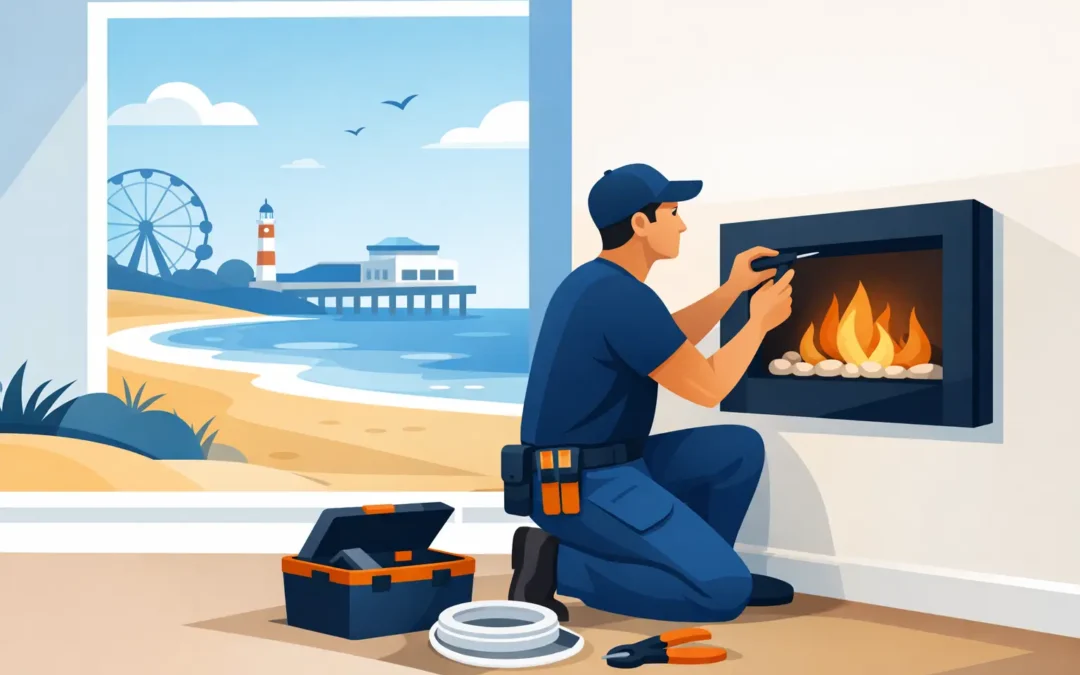
A new electric fire can change how a room feels remarkably quickly. It gives you a welcoming focal point, realistic flame effects and controllable heat without the need for a chimney or gas supply. For electric fire installation Skegness homeowners can rely on, the right preparation matters just as much as choosing a fire that looks good in the showroom.
Whether you are updating a tired fireplace, fitting out a new extension, improving a rental property or making a static caravan more comfortable in the cooler months, a properly planned installation helps ensure the fire is safe, neat and suited to the room.
Choosing the right electric fire for your room
Electric fires come in more styles than ever, from traditional inset models that sit within an existing fireplace opening to wall-mounted feature fires and media-wall installations. The best choice depends on the space you have, the look you want and whether the fire is intended as occasional extra heat or a regular source of warmth.
An inset electric fire is often a sensible option where a property already has a fireplace surround and opening. It can retain a familiar, traditional appearance while avoiding the need for a working flue. Freestanding electric stoves suit rooms where there is no fireplace at all, while a wall-mounted fire can make a strong feature in a modern lounge, dining room or bedroom.
Before buying, check the fire’s dimensions carefully. This includes its visible front, the depth required behind it, ventilation requirements stated by the manufacturer and the position of its plug or electrical connection. A fire that technically fits an opening may still look cramped if the surround is too narrow or if there is insufficient clearance around the appliance.
Heat output is also worth considering. Many electric fires offer a choice of heat settings, commonly around 1 kW and 2 kW, along with a flame-only setting. The flame-only mode is useful when you want the atmosphere of a fire without adding heat, particularly during warmer weather. However, an electric fire is usually best viewed as supplementary heating rather than a replacement for a properly designed central-heating system in a larger home.
What a professional fitting involves
A good installation begins with assessing the location, not simply placing the appliance where the old fire used to be. The fitter will consider the wall construction, available space, the fireplace or surround, and where the electrical supply can be safely reached.
If you are replacing an older electric fire, the existing opening may need cleaning, repairing or adapting before the new model can be fitted securely. Some installations require a suitable back panel, hearth or trim, while wall-mounted fires need fixings that are appropriate for the wall behind them. Plasterboard, solid brick and stud walls all require a different approach.
Electrical safety is a central part of the job. Many plug-in electric fires can be connected to an appropriate socket, but trailing leads across a room are not a tidy or safe long-term solution. Where a socket is concealed behind the fire, it must remain suitable for the appliance and accessible where required. For more involved installations, especially media walls or built-in feature fires, electrical work should be planned early so cables, sockets and isolation arrangements are correctly positioned.
The manufacturer’s instructions are not optional. They set out clearances from furnishings and combustible materials, ventilation requirements and the correct fixing method. Following them protects the appliance, supports its warranty and, most importantly, reduces avoidable risks in the home.
Electric fire installation in Skegness homes
Properties across Skegness and the Lincolnshire East Coast vary widely. A fire installation in a Victorian terrace may involve an existing chimney breast and a decorative surround, while a newer bungalow may call for a clean wall-mounted design. Holiday homes and static caravans bring another set of considerations, particularly limited wall space and the need to avoid placing heat too close to curtains, seating or lightweight interior finishes.
For caravan owners, it is particularly important to choose an appliance designed for the space and to follow the manufacturer’s mounting and clearance requirements exactly. An electric fire may be useful for taking the chill off during a visit, but it should not be relied on as the only protection against freezing when a caravan is closed for winter. Proper winter drain-down and antifreeze protection remain the safer way to protect pipework and water systems.
In rental homes, a well-fitted electric fire can be an attractive addition, but it should be durable, straightforward to operate and accompanied by the relevant instructions. Landlords should also think about where tenants will position furniture. Even an efficient modern appliance needs clear space around its heat outlet.
Preparing your room before fitting day
A little preparation makes the work quicker and helps achieve a better finish. Clear ornaments, furniture and rugs away from the fitting area, and make sure the installer can get to the relevant socket, fireplace opening or wall without having to move heavy items. If a fire is replacing an old appliance, decide in advance whether you want the old unit removed and how you would like the surrounding area finished.
It is also helpful to have made your decisions on the fire, surround and finish before the work begins. Changing from an inset fire to a wall-mounted model halfway through can affect the electrical position, wall repairs and the overall cost.
If you are planning a broader room update, consider the fire alongside any decorating, plastering, joinery or flooring work. For example, it is usually easier to install the electrical provision before a media wall is closed up, and simpler to fit a new fire before a final coat of paint. Coordinating these jobs avoids unnecessary rework.
The common mistakes to avoid
The most common problem is choosing on appearance alone. Flame effect, frame colour and a realistic fuel bed all matter, but a fire must suit the dimensions and construction of the intended location. Measure twice and check the manufacturer’s installation guidance before ordering.
Another mistake is treating the electrical connection as an afterthought. Avoid extension leads, overloaded sockets and cables trapped behind furniture. If you are unsure whether the current supply is suitable, ask before the installation is booked rather than after the fire has arrived.
It is also easy to underestimate the effect of furniture placement. Sofas, curtains, television units and rugs need to stay clear of the appliance’s heat outlet and any minimum distances specified in its instructions. This is especially relevant in compact lounges, bedrooms and caravans, where every inch is often in use.
Finally, do not assume every existing fireplace opening is ready for an electric appliance. Old openings can have loose debris, damaged lining, uneven surfaces or unsuitable dimensions. Addressing these issues properly produces a more secure, tidy result.
When an electric fire is the right choice
An electric fire is a practical option when you want the look and comfort of a flame effect without the installation requirements of a gas fire or solid-fuel stove. There is no chimney to line, no fuel to store and no combustion products produced in the room. It is also a flexible choice for homes without a gas connection and rooms where a feature fire is wanted mainly for atmosphere.
The trade-off is running cost. Electricity is generally more expensive per unit of heat than mains gas, so regular use as the main heating source may not be the most economical option. That does not make an electric fire a poor choice. Used to warm the room you are sitting in while the central heating is set sensibly, it can be a convenient and comfortable addition.
If you are considering a fire as part of a wider heating upgrade, it is worth looking at the whole property. Boiler performance, radiator controls, insulation, draughts and thermostat settings all affect comfort and energy use. A.C.S Gas Ltd can provide clear, local advice on electric fire fitting alongside heating, plumbing and home-improvement work, helping you plan the job around what your property actually needs.
A well-chosen electric fire should feel like it belongs in the room, not like an appliance squeezed into a gap. Take time to measure, plan the electrical supply and ask for professional guidance where the fitting is more than straightforward. The result is a warmer-looking home, a tidy installation and a fire you can enjoy with confidence.